Skip to content


White Roller Blackout Blinds: Does a Pale Fabric Really Block the Light?
- by Mariam Labadze
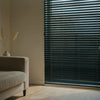
White roller blackout blinds stop as much light as black ones, because the blocking happens on the back of the fabric and the colour sits on the front. The face you pick changes how the room looks. The layer bonded behind it is what the sun has to get through.
The doubt is fair enough. Hold a white cotton sheet against a window and the sun burns straight through it, so a pale blind ought to leak by the same logic. A sheet has nothing behind it. White roller blackout blinds do.
Key Takeaways
-
The backing blocks, the dye does not. Light stops at the opaque layer behind the face, so the colour you chose has no say in it.
-
White changes glow, not darkness. A pale face lit by a bedside lamp reads brighter in the room than a charcoal one of the same build.
-
The edge halo is more obvious. Light creeping round the side spreads visibly across a white face and vanishes against a dark one.
-
Every colour leaks at the edges. White roller blackout blinds fitted inside a recess are cut narrower than the opening, so the side gap is built in before you choose a shade.
-
Marks show sooner on white. Kitchen and bathroom windows are the ones that make you regret a pale bottom bar.
How a Blackout Fabric Actually Works
A blackout roller is not one cloth. It is a face you look at with an opaque layer bonded behind it, wound onto the same tube and handled as a single sheet. Across the white roller blackout blinds on the site the principle holds whatever the shade on the front: the back of the fabric does the blocking.
That is what separates a blackout fabric from a dim-out one. A dim-out is just dense, so strong sun still reads through it as a general glow rather than a shape. Plain weave roller blinds sit further along the same line again, filtering daylight instead of stopping it. Density is a matter of degree. A bonded backing is a matter of yes or no.
So the useful test of white roller blackout blinds is not how dark the fabric looks draped over your hand. Hold a sample up against a bright window. If you can see the shape of the frame through it, it is a dim-out whatever the label says.
Why Colour Sits on the Wrong Side to Matter
Daylight arrives from outside. It reaches the back of the blind first, the opaque layer stops it there, and whatever is dyed on the room side never gets a vote. White roller blackout blinds and black ones are the same product facing two different ways.
Colour does earn its keep outside, though. A row of windows in the same building looks tidier with the same face showing from the street, which is why plain white roller blinds are the default in flats and why so many ranges keep a neutral reverse. The room side can be any shade you like; the outward side is the one your neighbours see.
What colour will not rescue is a badly measured blind. A black fabric hung with a two centimetre gap down one side is just as bright at six in the morning as a white one hung the same way.
Where White Does Change Things
White roller blackout blinds differ from dark ones in three ways, and all of them are about how the room feels rather than how much light gets through.
The first is lamplight. Switch a bedside lamp on and a white face throws that light back at you, so the blind reads as a bright panel in a dark room. A charcoal face swallows it. Both are equally opaque to the sun outside, and that difference is purely about the evening.
The second is the halo. Any blind fitted inside the recess leaves a thin strip of daylight down each side, and on a pale fabric that strip spreads across the face before it fades, which makes the leak look worse than it is. Mounting outside the recess with a generous overlap kills most of it and costs nothing. If you want the edges properly sealed, that is a different product: a honeycomb blackout blind running in side channels closes what no roller can.
The third is upkeep. White blackout blinds show finger marks along the bottom bar, dust along the top of the roll and splashes near a sink in a way a mid-grey simply does not. In a bedroom that rarely matters. Above a kitchen worktop it matters within a month.
White Roller Blackout Blinds in a Bedroom
Most people asking about blackout blinds for bedroom windows land on white because it disappears against a painted wall and does not fight the curtains. That is a sound reason to choose it, and the darkness you get is the same darkness the dark grey version would have given you.
The coating tends to do two jobs at once. The same dense layer that stops the light also puts still air between the room and the glass, which is why thermal blinds and blackout ones overlap so much on any site you browse. Treat the thermal part as a bonus rather than the reason to buy.
Where white roller blackout blinds lose is the landing light. If somebody opens the bedroom door at eleven at night, a pale blind lights up and a dark one stays quiet. For a light sleeper that is a real argument for going darker on the face, even though it changes nothing at sunrise.
Pick blackout blinds for windows on the fitting first and the colour second. Decide where the blind sits in relation to the recess, give yourself the overlap, then choose the shade that suits the room, because by that point the colour is a decorating question and nothing more.
Frequently asked questions
What are blackout roller blinds?
Blackout roller blinds are a single sheet of fabric with an opaque layer bonded to the back, wound on a tube and raised or lowered by a chain or a spring. The coating is what stops the daylight; the printed face only decides how the blind looks indoors. They are the cheapest way to darken a window substantially, and they still leak at the sides and above the roller.
Which blinds are best for blackout?
Anything that seals the edges beats anything that does not. A honeycomb or a roller running in side channels closes the gap down each side, which is the gap that wakes people up. After that, a coated roller mounted outside the recess with a generous overlap gets you most of the way for far less work. Fabric choice matters least of the three.
Are blackout blinds thermal?
Partly. A dense coated fabric held close to the glass traps a layer of still air, and that slows heat moving in either direction, so most blackout fabrics do something useful in winter. How much depends on how tightly the blind sits against the reveal, not on the fabric alone. A blind with a gap all round it is a curtain for the light and very little else.