Skip to content

Do Thermal Blinds Work? How They Work and Are They Worth It
- by Mariam Labadze
Yes, thermal blinds work. They trap a layer of still air or add an insulating lining between the cold glass and your room, which slows down heat escaping through the window. In independent tests at the University of Salford's Energy House, a blockout honeycomb blind in a clip-in frame cut heat loss through a window by 32%, and even a standard roller blind cut it by 13%.
Thermal blinds are one of the quickest ways to make a cold room feel warmer without building work. But not every blind is equally good at it. This guide explains what thermal blinds are, how they work, what the tests show, whether they are worth it, and which type keeps the most heat in.
Do thermal blinds work? The quick answer
- Yes, they work: tested blinds cut heat loss through a double-glazed window by 13% to 33%.
- Best type: honeycomb (cellular) blinds and blinds with side channels or a frame that seals the edges.
- How: they trap air, seal the edges and reflect heat back into the room.
- Summer too: closed thermal blinds block sun and help keep rooms cooler.
- Biggest factor: fit. A blind that sits close to the glass with no gaps keeps in far more heat.
- Worth it? Yes for cold rooms, bedrooms, conservatories and older windows.
What are thermal blinds?
Thermal blinds are window blinds designed to insulate. Instead of one thin layer of fabric, they use a structure or lining that slows heat moving through the window. The main types are:
- Honeycomb (cellular) blinds: two layers of fabric joined into honeycomb-shaped cells that trap air.
- Thermal roller blinds: roller blinds with a coated, foam-backed or reflective fabric.
- Thermal blackout blinds: dense blackout fabrics that block light and add an insulating layer.
- Thermal roman blinds: roman blinds with a thick thermal lining or interlining.
How do thermal blinds work?
Heat escapes through a window in three ways. A thermal blind slows down all three.
| How heat escapes | What happens | How a thermal blind helps |
|---|---|---|
| Conduction | Heat passes through the glass to the cold air outside | Trapped air in the blind acts as an insulating layer |
| Convection | Warm air touches cold glass, cools, falls and creates a draught | A close fit and side channels stop air moving round the blind |
| Radiation | Heat from radiators and people radiates out through the glass | Reflective or coated backings bounce heat back into the room |
The key is still air. Air that cannot move is a good insulator, which is why honeycomb cells and a tight seal at the edges make such a difference.
What the tests show
Research commissioned by the British Blind and Shutter Association (BBSA) and carried out at the University of Salford's Energy House tested different window coverings on an energy-efficient double-glazed window.
| Window covering tested | Reduction in heat loss through the window |
|---|---|
| Roller blind with zip side channels and low-e fabric | 33% |
| Blockout honeycomb blind in a framed bead-fit (clip-in) system | 32% |
| Internal plantation shutter | 28% |
| Roller blind with side channels | 22% |
| Standard roller blind | 13% |
Source: BBSA and University of Salford Energy House research (2023).
Two things stand out. First, every blind tested helped. Second, the blinds that sealed the edges, with side channels or a frame, cut more than twice as much heat loss as a standard roller blind.
Are thermal blinds worth it?
For most homes, yes. They are worth it if:
- A room feels cold or draughty near the window.
- You have older double glazing or single glazing.
- You want a bedroom that is both warm and dark.
- You have a conservatory or a room with lots of glass.
- A south or west-facing room gets too hot in summer.
They are less important if your windows are new, high-performance glazing in a well-insulated room. Even then, a closed blind still adds comfort near the glass at night.
How much money you save depends on your home, your windows and your heating. Read how much energy thermal blinds can save in the UK.
Which thermal blinds keep the most heat in?
| Blind type | Heat retention | Why | Best for |
|---|---|---|---|
| Honeycomb blind in a clip-in frame | Highest | Air-filled cells plus sealed edges | Bedrooms, tilt and turn windows, cold rooms |
| Roller blind with side channels | High | Side channels stop air moving round the edges | Bedrooms and living rooms |
| Thermal blackout pleated (perfect fit) | High | Dense fabric in a frame tight to the glass | uPVC windows, conservatories, French doors |
| Thermal roman blind | Medium | Thick lining, but gaps at the sides | Living rooms and dining rooms |
| Standard roller blind | Lower | Single layer with open edges | Rooms where heat is less of a concern |
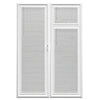
Our no drill honeycomb blackout blinds use exactly this design: foil-lined honeycomb cells in a slim frame that clips into your uPVC window, with side channels that close the gaps at the edges. Browse all thermal blinds.
How do thermal roller blinds work?
Thermal roller blinds use a thicker fabric with a coating, foam backing or reflective layer. When the blind is down, it adds a barrier between the glass and the room and reflects some heat back inside. They are used to keep rooms warmer in winter, block sun in summer and often to darken bedrooms too.
Because a roller blind has open sides, some warm air still escapes round the edges. To get the most from a thermal roller blind, fit it outside the recess with an overlap, or choose one with side channels. Read do thermal roller blinds keep the heat in? or browse our roller blinds.
Are blackout blinds thermal?
Not always. A blackout blind is made to block light, and a thermal blind is made to insulate. Thick, coated blackout fabrics do add some insulation, so they help a little. Honeycomb blackout blinds and thermal blackout blinds do both jobs well, giving you a dark room and a warmer one. Read thermal blackout blinds explained.
Do thermal blinds keep heat out in summer?
Yes. On hot days, closed thermal blinds block direct sun and reflect heat away from the glass. This works best on south and west-facing windows. Close the blinds in the morning before the sun hits the window, and keep them closed during the hottest part of the day.
How to get the most from thermal blinds
- Close them at dusk: lower the blinds as soon as it gets dark to trap the day's warmth.
- Open them on sunny winter days: let free sunshine warm the room, then close them before sunset.
- Close them on hot summer days: block the sun before it heats the room.
- Get a close fit: choose made-to-measure blinds that sit near the glass with no gaps.
- Keep radiators clear: do not let the blind hang over a radiator, or the heat goes behind it.
- Air the room: open the blind in the morning to let any condensation on the glass dry.
Frequently asked questions
Do thermal blinds work?
Yes. University of Salford tests found blinds cut heat loss through a window by 13% to 33%, with a framed honeycomb blind cutting it by 32%.
How do thermal blinds work?
They trap still air, seal the edges of the window and reflect heat back into the room. This slows heat escaping through the glass by conduction, convection and radiation.
What are thermal blinds?
Thermal blinds are blinds designed to insulate windows, using air-filled cells, thermal linings or reflective backings to keep heat in during winter and out during summer.
Are thermal blinds worth it?
Yes, especially for cold rooms, bedrooms, conservatories and older windows. They make rooms feel warmer and can help reduce heating use.
Are thermal blinds any good?
Yes. The best ones, such as honeycomb blinds in a clip-in frame, cut heat loss through the window by 32% in tests.
Will blinds keep heat in?
Yes, any closed blind helps a little. A standard roller blind cut heat loss by 13% in tests, while blinds that seal the edges cut it by more than 30%.
Do thermal blinds keep heat out?
Yes. Closed thermal blinds block sunlight and reflect heat, which helps keep rooms cooler in summer.
Are blackout blinds thermal?
Not always. Blackout blinds block light, but only some are made to insulate. Honeycomb and thermal blackout blinds do both.
Are roller blinds good for insulation?
Standard roller blinds give some insulation, cutting heat loss by about 13% in tests. Thermal roller blinds and roller blinds with side channels insulate much better.
What are thermal roller blinds?
Thermal roller blinds are roller blinds made with a thicker coated, foam-backed or reflective fabric that helps keep heat in.
What are thermal roller blinds used for?
They are used to keep rooms warmer in winter, block sun and heat in summer, and often to darken bedrooms and nurseries.
Can you get thermal roller blinds?
Yes. Thermal roller blinds are widely available made to measure. For the best result, fit them outside the recess or choose a style with side channels.
Are green blinds thermal?
Not because of the colour. A blind is thermal because of how it is made, such as honeycomb cells or an insulating lining, not because it is green. Some brands sell thermal fabrics in green, which is why people ask. Always check the blind is described as thermal or insulating.
Do thermal blinds stop condensation?
No. A thermal blind can make the glass behind it colder, so condensation can still form. Open the blind in the morning and keep the room ventilated.
What is the best thermal blind for a bedroom?
A honeycomb blackout blind in a clip-in frame, because it keeps heat in and blocks light at the edges. See our complete blackout honeycomb blinds.
The bottom line
Thermal blinds do work, and the tests prove it. The more closely a blind fits the glass and the better it seals the edges, the more heat it keeps in. For the warmest room, choose a honeycomb blind in a clip-in frame, close it at dusk and open it on sunny days. Explore our thermal blinds, honeycomb blackout blinds and no drill blinds at 1ClickBlinds.