Skip to content


Perfect Fit Blinds for French Doors: A No-Drill Fit That Moves With the Door
- by Mariam Labadze
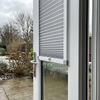
 Yes, you can get perfect fit blinds for french doors, and they are one of the tidiest solutions going. The blind sits in a slim frame that clips into the rubber beading around each glass panel, with no screws and no drilling. Because it is fixed to the door itself, it opens, closes and swings with the door and never bangs against the glass.
That last point is what makes perfect fit blinds for french doors so popular. A standard blind hung above the frame swings loose every time you open the door and catches the wind through a doorway. A perfect fit blind is held flat against the glass at both top and bottom, so it stays exactly where it should whether the door is shut or wide open. For UPVC french doors in particular, it is hard to beat.
[toc]
Can you get perfect fit blinds for french doors?
You can, provided your doors are UPVC or have a compatible beaded frame around the glass. The system relies on that raised bead, the strip of plastic that holds the double glazing in place. The blind's frame grips onto it with small brackets, so the glass carries the whole thing without a single hole being made. That is why renters and anyone wary of drilling into a door tend to choose this route.
The clue to whether yours will work is the depth of the flat area around the glass and the shape of the beading. Most modern UPVC french doors have plenty of both. Timber and aluminium doors vary, so they need checking case by case. If you are not sure your doors qualify, the safest move is to compare the range of perfect fit blinds against a photo and measurements of your own beading before ordering.
Once fitted, each door leaf gets its own blind. You never span a single blind across both leaves, because the doors move independently. Treating each panel separately means both doors keep working exactly as they did, and each blind lifts or tilts on its own.
How do they stay put as the door moves?
The frame is the answer. A perfect fit blind is not just a blind, it is a blind held inside a lightweight surround that clips at four or more points around the glazing bead. Once those clips are seated, the frame is under gentle tension against the glass. The blind slats or fabric live inside that frame, so there is nothing loose to swing.
When you open a french door, the whole assembly travels with the leaf. There is no cord dangling into the doorway, no bottom bar knocking the glass, and no need to tie anything back before you step outside. Close the door and the blind is already sitting flat and neat. This is the practical advantage that a conventional blind mounted on the wall above cannot match on a door that opens inwards or outwards.
Because the fitting is frameless in the sense of needing no screws, it also lifts off cleanly. That reversibility is exactly what makes it a favourite for rented homes. When you move out, the blinds come off and the door is left as you found it, with no filled holes to explain to a landlord.
French door blinds with no drilling
Drilling into a UPVC door is a genuine risk. The frames are hollow and reinforced in places you cannot see, and a screw in the wrong spot can crack the plastic or hit the sealed unit. That is why so many people search specifically for french door blinds with no drilling. Perfect fit is the most robust of these, but it is not the only no-drill route.
The two main families of no-drill fitting are clip-on systems like perfect fit, and magnetic or adhesive systems. Each suits a different situation, and it is worth understanding the trade-off before you decide. Our guide to magnetic vs clip-on blinds for renters sets the two approaches side by side and explains where each one earns its place.
For a broader view of what does not need a single hole, the full no drill blinds range covers the styles that fit doors and windows without touching the frame with a screwdriver. If keeping the door untouched is your priority, start there.
What blinds are best for french doors?
The best choice depends on what you want the blind to do. Perfect fit comes in several blind types, and each has a role.
Perfect fit venetian blinds are the popular pick. They let you tilt the slats for privacy while still seeing out and keeping some light, then raise them fully when you want the glass clear. The aluminium or wood-effect slats sit tight in the frame, so they do not rattle as the door moves.
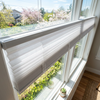
Perfect fit pleated blinds give a softer, fabric look and are good where you want a gentler feel or a bit of insulation against a cold door. They fold up compactly and suit kitchens and dining rooms that open onto a garden.
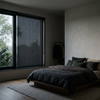
Perfect fit rollers offer a clean, plain face and are the simplest to operate, though they give less fine control over light than a venetian. For a bedroom door, a blackout fabric in a perfect fit frame keeps early light out while staying flush to the glass.
Whichever you choose, keep both leaves matching, and if your french doors sit between two side windows, carry the same style across the whole run so the wall reads as one treatment. The wider french door blinds collection shows the options grouped for exactly this kind of door.
Measuring and fitting
Measuring is straightforward because you are measuring the glass area, not the whole door. Measure the width and height of the visible glass, then check the depth of the flat gasket between the glass and the raised bead. That flat area needs enough room for the frame's clips to sit without fouling the handle or the door frame. Most UPVC doors give you plenty, but a quick check saves a return.
Fitting takes minutes per blind and needs no tools beyond your hands. You clip the top of the frame onto the bead, then the sides and bottom, working around until the whole surround is seated evenly. Run the blind up and down once to check it travels cleanly, and make sure the handle still turns freely with the blind in place. If a handle sits proud, some frames have a cut-out option to clear it.
A few things to watch. Trickle vents at the top of the glass should be left uncovered where possible. Check that the door still locks and the handle has full movement before you consider the job done. And on doors you use constantly, the venetian and pleated styles cope with daily knocks better than a loose fabric would.
Living with them day to day
In use, perfect fit blinds are close to fuss-free. There is no cord snaking into a busy doorway, which matters in a home with children or pets, and modern systems are designed to meet UK child-safety requirements without a dangling pull. Cleaning is a wipe of the slats or a light brush of the fabric. Because the frame holds everything flat, dust settles less than on a swinging blind.
Over years of use the clips hold firm, and if you ever need to clean the glass behind the blind, the whole frame unclips and lifts away in one piece. That combination of staying put in daily use and coming off cleanly when you need it is the reason perfect fit has become the default answer for dressing french doors without drilling.
Frequently asked questions
Can you get perfect fit blinds for french doors?
Yes, as long as your doors are UPVC or have a compatible glazing bead around the glass. The blind's frame clips onto that bead with no screws, so each door leaf gets its own blind fitted directly to the glass. It is one of the most secure no-drill options for french doors.
Do perfect fit blinds move with the door?
They do. The blind is clipped to the door itself rather than the wall above, so it swings with the leaf every time you open or close it. There is no loose bottom bar to bang the glass and no cord hanging into the doorway.
What blinds are best for french doors?
Perfect fit venetian blinds are the usual first choice because you can tilt the slats for privacy and light control while keeping the glass clear when you want. Pleated fabrics suit rooms wanting a softer look or extra insulation, and blackout rollers work well on bedroom doors. Match the style across both leaves and any side windows.