Skip to content


Pleated Blinds for Windows: A Slim, Neat Option for Any Room
- by Mariam Labadze
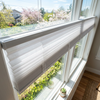
 Pleated blinds for windows are a good choice when you want a slim, discreet cover that folds away almost to nothing and suits awkward shapes. The fabric is pressed into a concertina of crisp folds that stack tightly at the top when raised, so the blind takes up very little space and sits neatly against the glass. They work across ordinary windows, doors and conservatories, and cope with shapes that flat blinds struggle with.
If your priority is a clean, understated finish rather than a heavy fabric statement, pleated is worth a serious look. The folded design keeps the whole thing shallow, which matters on doors and in rooms where a bulky blind would look wrong. Below I will explain what pleated blinds are, where they earn their place, and the heat question that comes up most often in UK homes.
[toc]
What pleated blinds actually are
A pleated blind is a single sheet of fabric folded into a fixed concertina pattern, a bit like a paper fan held on its side. Cords running through the pleats raise and lower it, and because the folds nest into each other, a fully raised blind collapses into a slim band at the top of the window. There are no slats and no rolled tube, which is why it looks so light against the glass.
The fabric comes in several finishes, from sheer light-filtering weaves that soften daylight to blackout and thermal versions that add privacy and insulation. That range is why pleated blinds turn up everywhere from bedrooms to garden rooms. The look stays consistent, but the fabric does the heavy lifting for each room's needs.
Many pleated blinds in the UK now come in a perfect fit format, where the concertina sits inside a slim frame that clips onto a UPVC window without drilling. That combination of a shallow blind and a drill-free frame is genuinely tidy on modern windows and doors. You can see the range of perfect fit pleated blinds built exactly this way.
Are pleated blinds good for windows?
For most homes, yes, and for a few situations they are the obvious answer rather than just an option.
Shaped and awkward windows
Because the fabric folds rather than rolls, pleated blinds handle shapes a roller never could. Angled, triangular and some arched windows can take a pleated blind cut to the shape, holding the fold pattern across the slope. If you have a landing window with a raked top or a gable-end triangle, this is often the only soft blind that fits properly.
Doors and tilting windows
A perfect fit pleated blind mounts to the sash, so it moves with a door or a tilting window and stays flat against the glass. There is nothing to swing or bang when you open up. The shallow fold stack also means the raised blind does not block the glass or crowd a door handle, which a chunkier blind can.
Rooms where you want the blind to disappear
When raised, a pleated blind almost vanishes into a thin line at the top of the window. In a room where you want the view and the frame to lead, not the window dressing, that discretion is the whole appeal. It is the quiet choice, and quiet is exactly what some rooms need.
The drill-free versions also make pleated a favourite for renters. If you are avoiding screws entirely, the no drill blinds range includes pleated styles that clip on and lift off without leaving a mark, so you keep both the neat look and your deposit.
Where pleated blinds work best
Conservatories and garden rooms
Pleated comes into its own in a conservatory. The folds suit the multiple panels and roof angles of a glass room, and thermal pleated fabrics tackle the two problems every conservatory has: too hot in summer, too cold in winter. A honeycomb or thermal-backed pleat traps a layer of air that slows heat moving through the glass, which takes the edge off both extremes.
If a conservatory is your main reason for looking, start with blinds sized and styled for those spaces. Our conservatory blinds are set up for the side panels of a glass room, and they pair naturally with pleated fabrics. For the roof and the worst of the summer heat, the thermal blinds range adds the insulating layer that keeps the room usable across the seasons.
Bedrooms and living rooms
In a bedroom, a blackout pleated fabric darkens the room while keeping the slim profile. In a living room, a light-filtering pleat softens harsh afternoon sun without shutting the space in. The same blind style flexes to the room simply by changing the fabric, which makes it easy to keep a consistent look through a house.
Do pleated blinds keep heat in?
They can, and this is where fabric choice matters most. A standard single-layer pleat is decorative and manages light, but it does little for insulation. A thermal or honeycomb pleat is a different animal. The honeycomb cells trap still air, and still air is a poor conductor of heat, so the blind slows warmth escaping through the glass in winter and slows solar heat coming in during summer.
That is why pleated conservatory blinds are so often specified in the thermal finish rather than plain fabric. In a glass room, the insulating pleat is doing real work, not just dressing the window. In an ordinary room with double glazing, a thermal pleat still helps at a cold single window, though the effect is naturally smaller than in an all-glass space.
Be realistic about it. A blind is not a wall, and it will not turn a freezing conservatory tropical. What a thermal pleat does is meaningfully reduce the heat swing, so the room settles more comfortably and your heating works less hard against a cold pane. For the rooms that suffer most from glass, that is a worthwhile difference.
Frequently asked questions
What are pleated blinds?
A pleated blind is a sheet of fabric folded into a fixed concertina of crisp pleats, raised and lowered by cords running through the folds. When raised it collapses into a slim band at the top of the window, so it sits neatly and takes up very little space. Fabrics range from sheer light-filtering weaves to blackout and thermal finishes.
Are pleated blinds good for windows?
Yes, especially for shaped windows, doors, tilting windows and conservatories where their slim folded design and drill-free perfect fit versions have a clear edge. They give a discreet, uncluttered finish and adapt to almost any room by changing the fabric. Their main limit is that a plain single-layer pleat is decorative rather than insulating, so choose a thermal fabric if warmth matters.
Do pleated blinds keep heat in?
Standard pleated fabric does little for insulation, but thermal and honeycomb pleats do, because the folds trap a layer of still air that slows heat moving through the glass. That helps keep warmth in during winter and heat out during summer, which is why thermal pleats are popular in conservatories. It reduces the temperature swing rather than eliminating it.