Skip to content


Zebra Roller Blinds: The Day-and-Night Look on a Simple Roller
- by Mariam Labadze
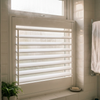
 Zebra roller blinds are a single roller blind made from fabric woven in alternating sheer and solid horizontal stripes. As you roll the blind up or down a fraction, the stripes line up either to let light flood through the sheer bands or to overlap into solid privacy. That simple sliding action is what gives you smooth, dial-in control over light and privacy from one easy-to-use blind.
They go by several names, which causes a lot of confusion, so it helps to clear that up early. Zebra roller blinds, zebra blinds, day and night roller blinds and vision blinds all describe the same thing: a striped roller blind that switches between see-through and solid. Once you understand how the stripes work, the appeal is obvious, and it is why they have become such a popular choice for UK living rooms and home offices.
[toc]
What are zebra roller blinds and how do they work?
Picture an ordinary roller blind, but instead of one flat fabric it has two layers of striped material, one behind the other. Each layer alternates bands of sheer, light-filtering fabric with bands of opaque, solid fabric. When you operate the blind, one layer slides a little against the other.
Line the solid bands of the front layer up with the sheer bands of the back layer and the whole blind becomes opaque, giving you privacy and shade. Nudge it so the sheer bands sit in front of the sheer bands and light streams straight through, letting you see out and daylight in. Everything between those two positions is available too, so you can dial the room from bright to dim in one continuous movement. That fine control is the heart of why zebra blinds have taken off, and you will find plenty of striped designs within the wider roller blinds range if you want to see how the fabric behaves.
Because it is still fundamentally a roller blind, it keeps all the practical virtues of one. It rolls up compactly into a slim cassette at the top, it takes up almost no space at the window, and it operates with a single chain or, if you prefer, a motor.
Zebra blinds and day and night blinds: are they the same?
For most purposes, yes. In the UK, zebra blinds, day and night blinds and vision blinds are used interchangeably for this striped, sliding roller. The names come from marketing rather than any real difference in how the blind works, so do not agonise over which term to search for. The whole family sits together in the day and night blinds collection, and you will notice the products described with several of these names side by side.
The only distinction worth knowing is against a double roller or dual roller blind, which is a different product. A double roller uses two entirely separate blinds on one bracket, often a sheer and a blackout, that you raise and lower independently. A zebra blind achieves a similar day-to-night effect through its woven stripes on a single roller, which is simpler to use and neater at the window. Both give you flexible light control; the zebra just does it in one movement.
Where zebra roller blinds work best
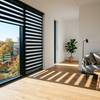
Living rooms are the classic home for them. You get privacy from the street without losing your daylight, and in the evening you can close the stripes for a cosy, shaded room. The soft banded light they cast is gentle and flattering, which suits a space you actually relax in.
Home offices are the other natural fit, and for a very practical reason: glare on screens. Being able to tilt the room's brightness down without plunging it into darkness means you can cut the glare on a monitor while still working in natural light. Anyone who has fought with a screen in a sunny room will appreciate that dial-in control.
They also suit kitchens, dining rooms and landings, anywhere you want a clean, modern look with adjustable light. The slim profile and wide choice of colours and textures let them slot into contemporary schemes easily. About the only place to think twice is a bedroom where you need pitch darkness, which the next section covers.
Do zebra roller blinds give privacy at night?
This is the question that catches people out, so it deserves a straight answer. During the day, closing the solid bands gives you good privacy while daylight keeps the room brighter than outside. At night the balance flips. Once your lights are on and it is dark outside, a room is far easier to see into, and while the solid bands of a closed zebra blind block the direct line of sight, some silhouette and light can still read from outside, particularly if a lamp sits close to the window.
For a living room this is usually fine, because the closed solid bands do screen the room well. For a bedroom or a ground-floor room facing a busy street, where you want certainty after dark, a standard zebra blind on its own is not the same as full blackout. If total night privacy and darkness matter, pair the blind with, or choose instead, something from the blackout blinds range, which blocks light and the view completely when closed. Many homeowners run a zebra blind in the living areas and reserve blackout for the bedrooms.
Motorised and no-drill options
Two features make zebra blinds especially easy to live with.
The first is motorisation. A motorised blind runs on a quiet motor you control with a remote, an app or even a voice assistant, and it removes the operating chain entirely, which is both tidy and safer around children. On tall or hard-to-reach windows, motorising is the difference between a blind you actually adjust through the day and one you set once and forget. The motorised day and night blinds range shows how the striped fabric pairs with remote control, and it is worth considering for a large living-room window or a run of bifold doors.
The second is fitting without drilling. If you rent, or your windows are uPVC and you would rather not put screws into the frame, a no-drill bracket clamps onto the window instead. It protects your deposit and your plaster, and it makes the whole job a tool-free ten minutes. Have a look at the no drill blinds options before you assume you need a drill, because a zebra blind is light enough to sit happily on a clamp-fit bracket. That combination of easy fitting and dial-in light control is a large part of why zebra roller blinds have become such a straightforward upgrade for so many UK homes.
Choosing and measuring
A few sensible choices give the best result. Decide first whether you want a recess fit inside the window reveal for a built-in look, or an exterior fit that covers more glass and blocks a little more side light. Then pick your fabric weight: lighter striped fabrics give a brighter, airier feel, while heavier ones shade the room more firmly when closed.
Measure width and drop in three places each, and use the tightest reading for a recess fit so the blind clears the reveal cleanly. Choose left or right for the chain, or skip the chain altogether by going motorised. Get those basics right and a zebra blind rewards you with years of smooth, adjustable light and a clean, modern window.
Frequently asked questions
What are zebra roller blinds?
They are a roller blind made from fabric woven in alternating sheer and solid horizontal stripes on two layers. Sliding the blind slightly aligns the stripes to either let light through the sheer bands or overlap into solid privacy. The result is smooth, adjustable control over light and privacy from one simple, space-saving roller blind.
Are zebra blinds and day and night blinds the same?
In the UK, yes. Zebra blinds, day and night blinds and vision blinds all describe the same striped, sliding roller blind, with the different names coming from marketing rather than any real difference. The one product they are not the same as is a double roller blind, which uses two separate blinds on one bracket rather than woven stripes.
Do zebra roller blinds give privacy at night?
They give good daytime privacy, and their solid bands do screen a room well when closed. After dark, though, once your interior lights are on, any blind of this type is easier to see past than in daylight, so it is not the equal of true blackout. For bedrooms or exposed ground-floor windows, pair a zebra blind with a blackout treatment for full night privacy.